With ‘building back greener’ at the heart of the Prime Minister’s strategy to rebuild Britain post-lockdown, Calvin Wilson, MD at Metal Technology, talks to Total Fabricator about the company’s extensive efforts to increase sustainability and reduce its environmental impact.
How sustainable is aluminium?
As one of the most abundant elements on earth, with its infinite recyclability, strength and lightness, combined with aluminium’s durability and low maintenance qualities, it’s one of the most sustainable building materials available.
What percentage of the metal used in Metal Technology products is recycled?
As part of the company’s agreed programme of sustainability, approximately 70% of the extrusion used in the production of Metal Technology’s glazing profiles is recycled. This metal requires only 5% of the energy necessary for the production of primary aluminium, with a consequent reduction of 95% in the green house gases produced, improving our environmental footprint.
Tell us about Metal Technology’s commitment to waste reduction
The business is committed to minimising all waste, both within the company and our activities, as well as through the supply of our range of window, door, curtain wall, brise soleil and louvre systems. Through our ISO14001 environmental quality accreditation, we have been able to reduce the impact of our operations on the environment year on year and bench mark ourselves on this basis.
What other related accreditations does Metal Technology hold? What do they demonstrate and how were they achieved?
We are also certified to BES6001 for responsible sourcing of construction products. This enables us to work within a framework which analyses and assesses your supply chain, ensuring that the products used in the manufacture of our product range have been responsibly sourced with traceability, using a documented environmental and sustainable management system.
Tell us about Metal Technology’s implementation of Environmental Management Plans
Implementing environmental plans are not just about seeking and securing accreditation. It has to be an ethos in the business, from the recycling of waste paper, to the use of solar energy, to the packaging you use, the logistics methods you implement to transport your goods to your energy consumption as a business and as individuals.
What criteria does Metal Technology use in developing its energy efficient products and systems?
Over the past 25 years the thermal and acoustic efficiency of aluminium window, door and façade systems has increased fourfold. So thermal efficiency is key to any new product development. However, this must also be married with a design which can be adapted while offering optimum performance, while still maintaining a value engineered solution. Our THERMAL range of window and doors is testament to that philosophy.
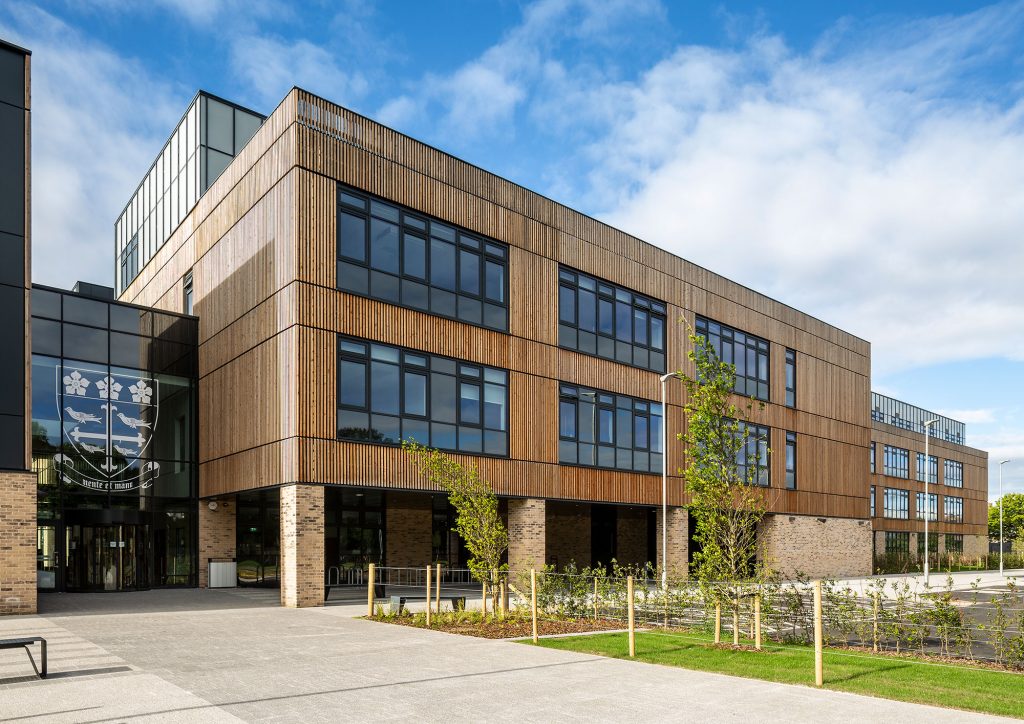
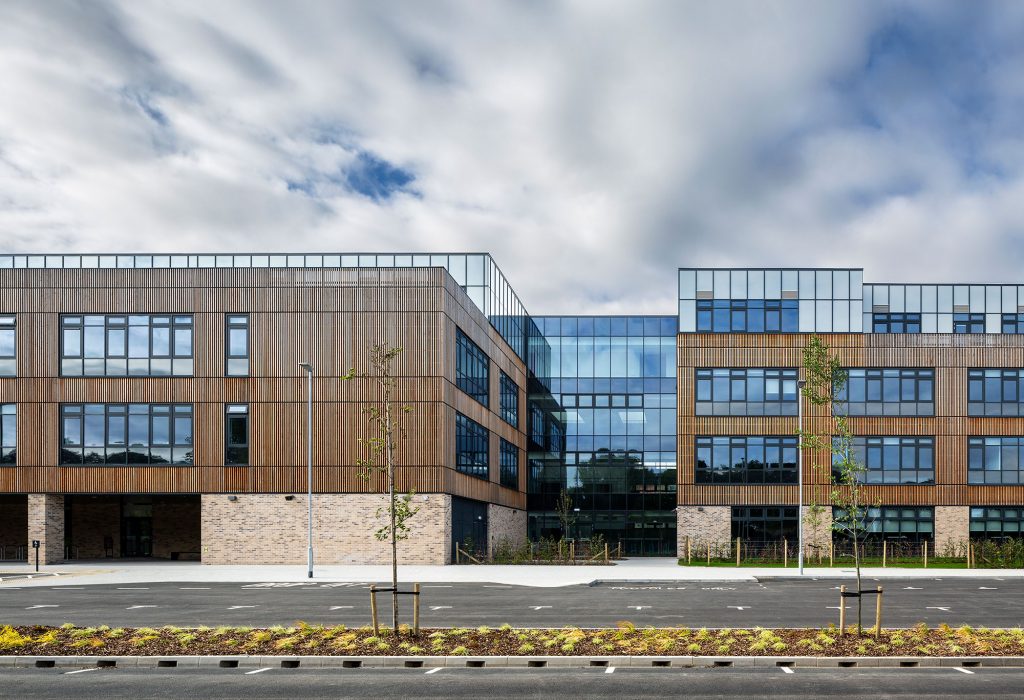
Metal Technology glazing systems are featured in the new headquarters of the Department of Agriculture, Environment and Rural Affairs (DAERA). How did the system help to optimise the project’s sustainability and energy efficiency?
We were asked to be involved at the early design stage of the project. The overall build was 5175m2 with bespoke brise soleil used on the south facing elevation. The project was to achieve a BREEAM rating of excellent and U-values of .85 W/m2K. We were able to achieve this in a combination of curtain walling and window configurations, with the building picking up a number of awards, winning CEF Construction Excellence ‘Commercial Project of the Year’ in 2018 and the ‘Design through Innovation’ award at the RICS NI Awards 2019.
Read Total Fabricator’s Aug-Sept issue here